How to Break Down Data Silos and Unlock Business Intelligence
Priya Patel
Nov 11, 2025
Your organization may already operate on best-in-class platforms — a powerful CRM for customer relationships, marketing automation that runs smoothly, a reliable ERP for finance, and an efficient ticketing system for support. On paper, it looks like a well-connected digital ecosystem.
But here’s the reality: these systems often operate in isolation. Sales relies on one version of customer data, marketing campaigns use another, and service teams address issues without the full context of previous interactions. Finance, meanwhile, bases forecasts on figures that may not align with operational data. Each team performs effectively within its own environment, yet the organization as a whole lacks a unified view.
When applications don’t communicate, each team ends up working with its own version of the truth—creating duplication, inconsistencies, and blind spots that slow decision-making and weaken collaboration.
This article explores how data silos form, why they continue to exist even in advanced organizations, and how leaders can break them down through better integration.
What are Data Silos?
Data silos form when information is stored in separate systems that don’t share or connect with each other. Sales, marketing, finance, and operations might each manage their own data, but without a way to link it together, no one sees the full picture.
For example, sales might track customer interactions, marketing measures engagement, and finance monitors revenue—but none of these systems share a unified source of truth. Decisions are made on partial insights, and collaboration becomes harder because every team is working from its own version of reality.
How Data Silos Impact Business Performance
Data silos do more than create operational inefficiencies. They quietly erode collaboration, strategic insight, and innovation across the enterprise. Here’s how they show up in practice:

Limited Data Visibility
When data is kept in silos, decision-makers can only see isolated portions of information. This makes it hard to get a complete picture of operations, impacting the quality of decisions.
For example, if sales data isn’t shared with marketing or customer service, teams can’t cooperate effectively, leading to missed sales or poor customer support. This lack of visibility blocks enterprise-wide insights, slowing your ability to respond to market changes.
Inconsistent and Conflicting Data
Different departments often store and update similar information independently. Without coordination, this leads to conflicting or outdated records.
For instance, the marketing team may update customer contact details in their CRM, but sales continues using old info, resulting in duplicated efforts and confused customers. These discrepancies undermine trust in business reports and analytics.
Wasted Time and Resources
Siloed data causes employees to spend excessive time reconciling data differences or recreating reports that already exist elsewhere.
For example, finance teams might manually combine data from multiple sources instead of getting accurate consolidated reports, delaying budgeting and forecasting processes. This duplication wastes valuable human and IT resources.
Reduced Collaboration and Innovation
AI and advanced analytics can’t deliver value without connected, high-quality data, stalling digital transformation efforts. Data silos contribute to a culture where teams guard their information, fueling mistrust and limited collaboration.
For example, when customer feedback from service isn’t integrated into product development data, opportunities for improvement go unnoticed—slowing innovation cycles.
Increased Costs
Maintaining multiple, disconnected data systems is expensive. Organizations pay for separate software licenses, storage, and support for similar information across departments.
For example, customer data stored separately in sales, marketing, and support platforms means repeated storage costs and management efforts.
Security and Compliance Risks
Data scattered across uncontrolled environments like personal drives or unsanctioned cloud storage increases vulnerability to breaches and legal penalties.
Healthcare organizations, in particular, face compliance risks if patient information isn’t properly managed across silos, risking privacy violations and hefty fines.
Solving these issues starts with breaking down silos and creating a unified data landscape.
Unlock Hidden Savings by Eliminating Costly Data Silos
Data silos drain resources, slow workflows, and inflate operational costs—impacting your bottom line more than you realize. BuzzClan’s expert data engineering services break down these barriers, streamline data flow, and improve efficiency, helping you cut unnecessary expenses and boost profitability.
Breaking Down Data Silos: A Practical Framework
Breaking down data silos isn’t a quick fix; it requires a comprehensive, well-planned approach that combines technological solutions, organizational change, and cultural shifts. Here’s a detailed, practical strategy:
Establish a Clear Data Integration Roadmap
Start by thoroughly understanding where your silos are and how they block key business operations, such as customer insights, supply chain management, and financial reporting. Prioritize these areas to deliver quick, measurable wins. Develop a detailed plan that includes timelines and resource allocation to integrate the most impactful data sources first. For example, consolidating customer data into a single, unified platform allows all teams—sales, support, and marketing—to work coherently, drastically improving customer experience and retention.
Foster a Culture of Collaboration and Data Sharing
Encourage openness across departments by creating cross-functional teams dedicated to data projects. Promote a culture where sharing data is rewarded and seen as a strategic advantage. Regular interdepartmental meetings, joint training sessions on new tools, and shared dashboards help break down inter-team barriers. When leadership visibly supports transparent data practices, it cascades down, transforming the organizational culture.
Build a Centralized Data Hub with Modern Technologies
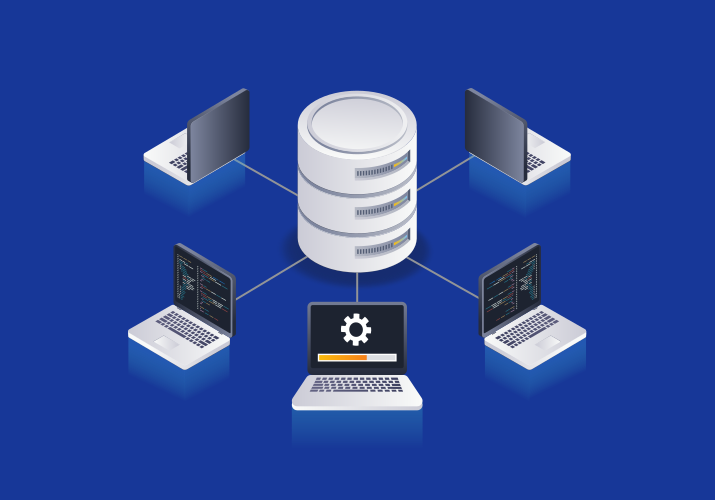
Implement a centralized data warehouse or data lake to act as a single source of truth. Modern solutions like data fabric and virtualization allow real-time, seamless access without copying or moving large datasets. Cloud-based platforms enhance scalability, security, and accessibility, enabling remote teams to collaborate effortlessly. Automating data cleansing, validation, and synchronization processes also ensures consistent, high-quality data.
Standardize Data Across Systems
Create uniform rules for data entry, naming conventions, and formats across all departments. Automation tools can enforce these standards, ensuring data consistency at scale. For example, a unified customer ID system eliminates duplicate records and provides reliable customer journey tracking, enabling precise personalization.
Adopt Cutting-Edge Data Integration and Management Tools
Invest in tools that facilitate API connectivity, real-time data syncing, and automated data transformation. Cloud-native solutions, ETL/ELT platforms, and data virtualization are crucial to efficiently connecting diverse systems. They reduce manual work, minimize errors, and ensure everyone accesses the same, up-to-date information.
Best Practices for Sustainable Integration
Once integration begins, sustaining it requires discipline and governance. Successful organizations follow a few key practices:
- Monitor and Measure Continuously: Define KPIs for integration success, such as data accuracy, processing time, or cross-departmental adoption. Regularly audit these metrics to track progress.
- Prioritize Security and Compliance: Centralized data doesn’t mean less control. Implement access policies, encryption, and audit trails to ensure compliance with regulations like GDPR or HIPAA.
- Automate Wherever Possible: Use automation for data synchronization, cleansing, and reporting to reduce human error and maintain consistency at scale.
- Scale Strategically: Begin with high-impact areas (e.g., customer 360, financial consolidation) and expand gradually. A phased approach ensures faster wins and stronger internal support.
Conclusion
Eliminating data silos starts with acknowledging that disconnected data means disconnected strategy.
By adopting a unified data architecture, implementing governance frameworks, and fostering collaboration across departments, organizations can transform isolated information into shared insight. This results in faster decision-making, stronger customer alignment, and a clearer view of business performance.
Transform hidden costs into measurable savings with BuzzClan’s data engineering expertise.
Stop letting costly data silos drain your resources and limit growth. Our customized data engineering solutions unify your data, optimize workflows, and reduce operational expenses, turning your data into a strategic asset that drives profitability.
Connect with our experts today to unlock the true value of your data and start saving.
FAQs

Get In Touch
Follow Us