

Too Many Vulnerabilities? How AI-Driven CTEM Helps Prioritize Risk
Rahul Rastogi
Sep 30, 2026
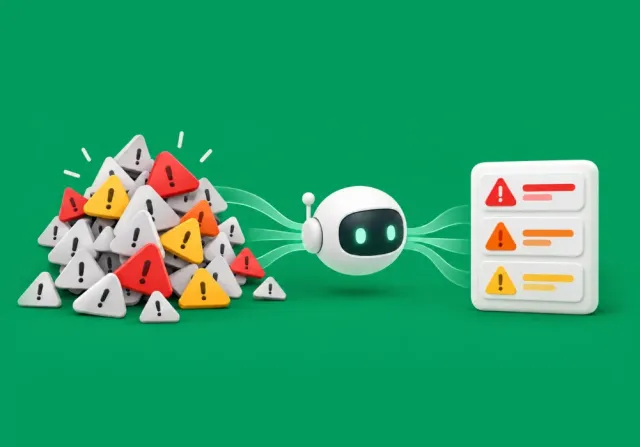
A vulnerability list can show security teams where weaknesses exist. The harder question is knowing which of those weaknesses could actually put the business at risk.
Not every vulnerability matters equally. A flaw affecting an isolated system may require a different response than one on an internet-facing asset, one that exposes sensitive information, or one that creates a path to a critical application. Yet when teams view findings mainly through severity scores, they can easily miss that surrounding context.
This is where AI-driven CTEM becomes valuable. By bringing vulnerability findings together with asset criticality, exposure, threat context, identities, and attack paths, it can help security teams see how individual weaknesses connect and which exposures deserve attention first.
This article explores how AI-driven CTEM changes vulnerability prioritization, how it helps validate and contextualize exposure, where it can improve remediation decisions, and what businesses should look for in a CTEM solution. Along the way, the focus stays on the decision that matters most: determining which risks require action now and which can wait.
Why AI-Driven CTEM Matters
Vulnerability management can tell teams where known weaknesses exist. CTEM broadens that view by treating exposure as a connected risk problem rather than every finding as an isolated ticket.
That distinction matters because an exploitable vulnerability becomes more significant when it affects an important asset, is reachable by an attacker, or forms part of a path to something the business needs to protect. CTEM makes discovery, prioritization, validation, and remediation a continuous process so teams can focus on the exposures that matter most.
AI can strengthen this process by helping analyze relationships across large amounts of security and asset data. Instead of requiring analysts to manually compare vulnerability findings with asset context, identities, configurations, threat signals, and network relationships, an AI-driven approach can help surface those connections and update priorities as conditions change.
That does not make AI the final decision-maker.
The value comes from giving security teams better context for the decision they already have to make:
Which exposure should be addressed first, why does it matter, and what action will reduce that risk?
6 Ways AI-Driven CTEM Helps Prioritize Vulnerability Risk

AI-driven CTEM brings vulnerability data into the context of exposure, exploitability, asset importance, attack paths, and changing risk conditions, helping security teams determine which vulnerabilities require attention first and why. The following six capabilities show how that broader context can make vulnerability prioritization more focused and actionable.
1. Prioritize Vulnerabilities Based on Where They Actually Exist
A vulnerability does not carry the same practical risk on every asset.
Consider the difference between a vulnerability affecting an isolated development system and the same vulnerability affecting a production application exposed to the internet and connected to sensitive resources. The technical weakness may be identical, but the surrounding exposure is not.
An AI-driven CTEM approach can combine vulnerability findings with information about asset criticality, exposure, access, connectivity, and business importance. This gives the security team a clearer picture of where a vulnerability sits within the environment rather than forcing them to evaluate it as a standalone finding.
That context is essential because NIST recommends identifying assets that are critical to mission and business objectives and using their potential impact to inform risk prioritization.
The result is a more useful remediation question:
Is this vulnerability simply present, or is it present somewhere the organization cannot afford to expose?
2. Focus on Vulnerabilities Attackers Are Most Likely to Exploit
Severity describes the characteristics of a vulnerability. It does not tell a team whether attackers are likely to exploit it.
That is where threat intelligence becomes useful.
Signals such as EPSS provide an estimate of the likelihood that exploitation activity for a vulnerability will be observed in the next 30 days. CISA’s Known Exploited Vulnerabilities (KEV) Catalog provides a different signal by identifying vulnerabilities with confirmed exploitation. FIRST explicitly notes that EPSS is not a complete risk score and should be considered alongside environmental and impact context.
AI-driven CTEM can bring these threat signals together with what the organization knows about its own environment.
For example, a vulnerability with strong exploitation signals becomes more relevant when it is also present on an exposed production asset. The combination gives the security team more useful context than severity alone.
This helps prioritize vulnerabilities according to what attackers are doing and what the organization has exposed, rather than treating every high-severity finding as equally urgent.
3. Identify Vulnerabilities That Create Paths to Critical Systems
A vulnerability can become much more important when it is part of a broader route toward a critical system.
An attacker may not need one vulnerability to compromise a high-value asset directly. A combination of an exposed application, a weak identity, excessive privileges, and a vulnerable internal system can create a path that is significantly more concerning than any one finding suggests.
This is why CTEM looks beyond individual vulnerabilities and considers how exposures relate to one another. Modern exposure-management approaches use relationships between assets, identities, configurations, and vulnerabilities to understand potential attack paths.
AI can help analyze these relationships across large environments and surface paths that may not be obvious when findings are reviewed separately.
That changes the question from:
“Which vulnerabilities are open?”
to:
“Which weaknesses can combine to give an attacker a path to something important?”
That distinction can help teams identify remediation actions that break an attack path, rather than simply reducing the number of open findings.
4. Prioritize Vulnerabilities by Their Potential Business Impact
Security teams work with vulnerabilities. Business leaders need to understand what those vulnerabilities mean for the organization.
That connection is difficult when risk is presented as a collection of severity scores and technical findings without the business context behind them.
AI-driven CTEM can connect security findings with information about critical applications, sensitive data, business services, and operational dependencies. This creates a clearer link between a technical weakness and the business function it could affect.
For example, a vulnerability affecting an application that supports a critical business process may deserve more attention than the same vulnerability affecting a system with limited operational importance.
NIST’s guidance makes this connection explicit by emphasizing the importance of understanding which assets support mission objectives and how their compromise could affect enterprise goals.
That makes vulnerability prioritization easier to communicate across security, IT, and business teams because the discussion moves from technical severity to business consequence.
5. Separate Theoretical Risk From Real, Reachable Exposure
Finding a vulnerability does not automatically establish that an attacker can use it in the organization’s environment.
Reachability, authentication requirements, network controls, configuration, segmentation, and other conditions can change the practical exposure around a vulnerability.
Validation is therefore an important part of CTEM. It tests whether a prioritized exposure is reachable or exploitable under the environment’s conditions and whether existing controls behave as expected.
This matters because prioritization becomes more useful when it is based on evidence rather than assumption.
A vulnerability that appears severe but is not reachable through the relevant attack path may require a different response from an exposure that can be practically reached and affects a critical asset.
AI can help organize the evidence and connect validation results back to the broader risk picture, while security teams retain responsibility for interpreting that evidence and deciding how to respond.
6. Reprioritize Risk as Your Environment and Threats Change
Risk changes even when the underlying vulnerability does not.
An asset may become externally accessible. A new connection may create an attack path. A privileged identity may gain access to a vulnerable system. Threat activity may also change the urgency around a known vulnerability.
A static vulnerability report captures only the environment’s state when it was generated.
Continuous exposure management is designed to keep reassessing those conditions. AI can help process new security findings, threat signals, asset changes, and exposure relationships so priorities can be updated as the environment changes.
This is particularly useful when teams manage large remediation queues because the priority list can stay tied to the current exposure picture rather than becoming a collection of outdated assumptions.
The question becomes:
What represents the most meaningful exposure now?
That is a much stronger basis for deciding where remediation effort should go next.
Turn Security Findings Into Actionable Risk Priorities
Move beyond disconnected vulnerability findings with a security approach built around exposure, context, and business risk. Strengthen visibility and make remediation decisions with greater clarity.
Business Impact: From Vulnerability Volume to Measurable Risk Reduction
Closing vulnerabilities matters, but the number of closed findings does not necessarily show whether the organization’s most important exposures have been reduced.
A CTEM program provides a different way to measure progress.
Instead of asking only how many vulnerabilities were remediated, security leaders can look at whether remediation is reducing exposure around critical assets, viable attack paths, important threat signals, and other business-relevant conditions.
For example, one remediation action may remove an attack path to a critical application. Another may eliminate an excessive privilege that allowed movement between systems. A configuration change may reduce an exposure without requiring multiple separate vulnerability fixes.
That means the most valuable remediation action is not always the one attached to the highest number of findings. It can be the one that changes the broader exposure picture.
| Traditional Vulnerability Metric | CTEM-Oriented Measure |
|---|---|
| Number of vulnerabilities closed | Reduction in meaningful exposure |
| Severity of open findings | Risk in the context of the affected environment |
| Patch completion rate | Reduction in exposure around critical assets |
| Vulnerabilities by asset | Attack paths and relationships between exposures |
| Size of remediation backlog | Priority exposures remaining |
| Findings identified | Exposures validated and addressed |
For leadership, that creates a more useful view of cybersecurity performance because the conversation is tied to risk reduction rather than remediation volume alone. NIST likewise emphasizes prioritizing cybersecurity risk in relation to potential impact on enterprise objectives.
What Should Businesses Look for in an AI-Driven CTEM Solution?
CTEM is broader than a vulnerability scanner, so choosing a CTEM solution should start with the decisions the security team needs to make rather than the presence of an AI label.
A capable platform should help connect exposure data, explain why something has been prioritized, and support the workflow from discovery through remediation.
Connected Exposure Data
The platform should bring together vulnerability, asset, identity, cloud, configuration, and exposure information so relationships between findings are visible rather than divided across separate tools.
Threat-Aware Prioritization
It should incorporate relevant threat intelligence and exploitation signals while keeping those signals in context with the organization’s own assets and exposure.
Business Context
The solution should help identify which systems, applications, data stores, and business services are most important so remediation priorities reflect business consequence.
Attack-Path Analysis
The platform should show how vulnerabilities and other weaknesses connect and whether those relationships create a route toward critical assets.
Exposure Validation
The system should support validation of whether prioritized exposures are actually reachable or exploitable in the organization’s environment and whether existing controls work as intended.
Explainable Prioritization
Security analysts should be able to understand why an exposure has been prioritized. AI should provide useful context rather than produce an unexplained recommendation.
Actionable Remediation
The solution should connect prioritized exposures to remediation workflows and help teams identify actions that meaningfully reduce the underlying exposure.
Continuous Reassessment
Priorities should be able to change as assets, configurations, threat conditions, and attack paths change.
For organizations evaluating CTEM products, CTEM tools, or CTEM implementation approaches, one question brings these requirements together:
Can the platform help us understand what is exposed, why it matters, and what action will reduce the risk most effectively?
Conclusion
The challenge is not knowing that vulnerabilities exist. It is determining which ones represent the most meaningful risk in the environment right now.
AI-driven CTEM helps answer that question by connecting vulnerability findings with asset criticality, exposure, threat context, attack paths, business impact, and validation. That broader view allows security teams to move beyond severity-based queues and focus remediation where it can make the greatest difference.
The result is a more focused approach to vulnerability risk: understand the exposure, validate its relevance, prioritize it in context, and connect remediation to measurable risk reduction.
Have More Vulnerabilities Than Your Team Can Prioritize?
Discuss your current exposure, security workflows, and risk priorities with BuzzClan to identify where a more focused approach to vulnerability management can make a measurable difference.
Frequently Asked Questions
AI can correlate vulnerability findings with asset criticality, exposure, threat context, identities, configurations, and attack paths. This gives security teams more context for deciding which vulnerabilities deserve attention first.
CVSS helps describe the technical severity of a vulnerability, but severity alone does not capture the full risk within a specific environment. Additional context is needed to understand exposure, exploitability, asset importance, and business impact.
Vulnerability management focuses primarily on identifying and remediating vulnerabilities. CTEM takes a broader exposure-based view by connecting vulnerabilities with assets, attack paths, threat conditions, validation, and business context.
CTEM can connect technical findings with information about critical assets, sensitive data, business services, and exposure paths. This helps security teams understand which vulnerabilities could have greater business consequences.
Validation helps determine whether an exposure is actually reachable or exploitable within the organization’s environment. That additional evidence can help teams distinguish practical exposure from theoretical risk.
BuzzClan can help organizations assess their security environment and build a more contextual approach to identifying, prioritizing, and addressing cybersecurity exposure.
Yes. BuzzClan can support organizations through the planning, implementation, and operational aspects of building a CTEM-focused security approach around their existing environment and priorities.
BuzzClan can help organizations bring security findings into the context of critical systems, business priorities, and broader exposure so security teams can make more informed remediation decisions.
BuzzClan can help assess CTEM requirements, evaluate the capabilities needed for the environment, and determine how different tools or approaches align with the organization’s security and operational needs.
BuzzClan can help organizations bring together security visibility, risk context, prioritization, and remediation workflows so teams can focus their efforts on exposures that matter most.

Get In Touch


