
Understanding the MITRE ATT&CK Framework: Your Complete Guide to Advanced Threat Intelligence
Ramesh Rastogi
Nov 18, 2025

Organizations worldwide face an unprecedented surge in sophisticated cyberattacks that bypass traditional security measures. As threat actors evolve their methods, security teams need more than reactive defenses – they need a comprehensive understanding of adversary behavior. That’s where the MITRE ATT&CK framework transforms how we approach cybersecurity.
The MITRE ATT&CK framework represents a fundamental shift from focusing solely on what happened after an attack to understanding how adversaries operate throughout the entire attack lifecycle. Whether you’re a security analyst hunting threats, a CISO building defense strategies, or an IT professional seeking to understand modern cybersecurity, this guide delivers the depth and practical insights you need.
What Is MITRE ATT&CK?
MITRE ATT&CK is a globally accessible knowledge base that catalogs adversary tactics and techniques based on real-world observations. Developed by MITRE Corporation, a not-for-profit organization operating federally funded research centers, this framework has become the de facto standard for understanding cyber-adversary behavior.
The acronym ATT&CK stands for Adversarial Tactics, Techniques, and Common Knowledge. Unlike traditional security frameworks that focus on theoretical scenarios, the MITRE ATT&CK framework documents how actual threat actors conduct attacks in production environments. This knowledge base continuously evolves as security researchers contribute observations from real incidents, making it one of the most dynamic and practical resources available to defenders.
The framework originated at MITRE’s Fort Meade Experiment, where researchers conducted adversary-emulation exercises to analyze both attacker and defender behavior. What began as an internal research project in 2013 evolved into a comprehensive public resource that fundamentally changed how organizations approach threat detection and defense.
Today, the MITRE ATT&CK knowledge base contains hundreds of documented techniques across multiple technology domains, including traditional enterprise networks, cloud platforms, mobile devices, and industrial control systems. Each technique includes detailed information about how adversaries execute it, what prerequisites they need, how to detect it, and mitigation strategies.
The Core Components of the MITRE Attack Framework
Understanding Mitre attack requires grasping its hierarchical structure. The framework organizes adversary behavior into three primary layers that build upon each other.
Tactics: The “Why” of Attack Behavior
Tactics represent an adversary’s tactical objectives – the goals they’re trying to achieve at each stage of an attack. The Enterprise MITRE ATT&CK matrix includes 14 distinct tactics that map to different phases of a cyberattack:
- Reconnaissance involves adversaries gathering information to plan future operations. This includes researching potential targets through open-source intelligence (OSINT), identifying vulnerabilities in exposed systems, and mapping organizational structures.
- Resource Development covers how attackers establish the infrastructure needed for their operations, including acquiring domains, setting up command-and-control servers, obtaining exploits, and developing malicious tools.
- Initial Access encompasses techniques used to gain entry into targeted networks, ranging from phishing campaigns and exploiting public-facing applications to the use of valid credentials obtained through various means.
- Execution represents how adversaries run malicious code on compromised systems, whether through scripting, scheduled tasks, or legitimate system administration tools.
- Persistence includes methods for maintaining access even after system reboots, updates, or changes to credentials. This ensures adversaries can continue their operations over extended periods.
- Privilege Escalation covers techniques for gaining higher-level permissions, enabling attackers to access more sensitive data and perform restricted operations.
- Defense Evasion involves tactics used to avoid detection by security controls, from disabling antivirus software to obfuscating malicious code and abusing trusted processes.
- Credential Access focuses on stealing account credentials, including passwords, access tokens, and authentication certificates that enable lateral movement and elevated access.
- Discovery represents reconnaissance conducted after gaining initial access, as adversaries map the internal environment, identify valuable targets, and understand network architecture.
- Lateral Movement encompasses techniques for moving through a compromised network, accessing additional systems, and expanding the attack footprint.
- Collection involves gathering data of interest to the adversary’s mission, whether intellectual property, sensitive customer information, or operational intelligence.
- Command and Control (C2) describes how adversaries communicate with compromised systems, maintain persistence, and exfiltrate data while evading detection.
- Exfiltration refers to techniques for stealing data from a target network, using various channels and methods to bypass data loss prevention controls.
- Impact includes actions that disrupt the availability or integrity of systems and data, from ransomware deployment to data destruction and service disruption.
Techniques: The “How” of Execution
While tactics answer the “why” of adversaries’ specific actions, Mitre techniques detail exactly how they accomplish those objectives. The framework currently documents 185+ techniques in the Enterprise matrix alone, each representing a particular method adversaries use.
For example, under the Initial Access tactic, techniques include spearphishing attachments, exploiting public-facing applications, and using compromised valid accounts. Each technique contains:
- Detailed descriptions of how the method works
- Real-world examples from documented threat actor campaigns
- Technical details about implementation
- Prerequisites and permissions required
- Detection opportunities and logging requirements
- Mitigation strategies and defensive controls
Many techniques also include sub-techniques that provide even more granular detail. For instance, the “Credential Dumping” technique breaks down into sub-techniques for LSASS Memory extraction, Security Account Manager access, and NTDS database dumping. This level of specificity helps security teams develop precise detection rules and prioritize defensive investments.
Procedures: Real-World Implementation
Procedures represent the specific implementation details of how known threat actors use particular techniques. The MITRE Att&ck matrix documents actual procedures observed during real incidents, providing concrete examples of adversary behavior.
This is where “Common Knowledge” comes into play – the framework aggregates documented procedures across the security community, creating a shared intelligence resource. When a new APT group emerges or an existing group adopts new techniques, security researchers contribute their observations to expand the collective knowledge base.
The MITRE ATT&CK Matrix: A Visual Approach to Threat Intelligence
The Mitre Att&ck matrix presents all tactics and techniques in an intuitive visual format that security professionals can quickly parse and reference. Think of it as a comprehensive map of the threat landscape, where each column represents a tactic and each cell contains related techniques.
Understanding the Enterprise Matrix
The Enterprise matrix serves as the primary reference for most organizations. It covers attacks against traditional IT infrastructure, including Windows, macOS, and Linux systems, as well as network infrastructure, cloud platforms, and containerized environments.
This matrix has evolved significantly since its initial release. Current versions reflect the modern reality of hybrid environments where on-premises infrastructure coexists with cloud services, containerized applications, and software-as-a-service platforms. The framework provides platform-specific details when techniques vary across operating systems while maintaining a unified structure.
Security teams use the Enterprise matrix to conduct gap analyses, identifying which techniques their current defenses address and where coverage gaps exist. This enables risk-based prioritization of security investments rather than implementing controls arbitrarily.
Mobile and ICS Matrices
Beyond enterprise IT, MITRE maintains specialized matrices for mobile platforms and industrial control systems, recognizing that these environments face unique threats requiring tailored defenses.
The Mobile matrix covers iOS and Android attack vectors, including malicious applications, SMS phishing, and the exploitation of device management frameworks. As mobile devices increasingly access corporate resources and handle sensitive data, this matrix helps organizations extend their security visibility beyond traditional endpoints.
The ICS matrix addresses the specialized operational technology environment in which adversaries target physical processes and critical infrastructure. Techniques in this matrix include manipulating control systems, inhibiting safety functions, and disrupting industrial operations – actions with potentially catastrophic physical consequences beyond data compromise.
Practical Applications of MITRE Tactics and Techniques
Understanding the theoretical framework is only the starting point. The real value emerges when organizations operationalize these concepts to improve their security posture.
Threat Hunting and Detection Engineering
Threat hunters leverage the MITRE ATT&CK framework to structure their investigations and prioritize hunting hypotheses. Rather than searching randomly for threats, hunters can focus on specific techniques commonly used by relevant adversaries.
For example, if threat intelligence indicates increased activity from APT groups that commonly abuse Windows Management Instrumentation (WMI), hunters can develop specific queries to detect unusual WMI activity in their environment. The framework provides the technical details needed to craft compelling detection logic, including command-line patterns, registry modifications, and process relationships associated with malicious WMI use.
Detection engineering teams map their existing security controls to MITRE techniques, creating heat maps that visualize detection coverage. This reveals blind spots where adversaries could operate undetected and enables data-driven decisions about which detection capabilities to develop next.
Organizations integrating advanced threat intelligence capabilities find that mapping behavioral analytics to MITRE techniques dramatically improves detection accuracy and reduces false positives.
Red Team Operations and Adversary Emulation
Red teams use MITRE ATT&CK to design realistic attack scenarios that test organizational defenses. Rather than executing generic penetration tests, red teamers can emulate specific threat actor groups by implementing the techniques those groups are known to use.
This adversary emulation approach provides more valuable insights than traditional security assessments. When red team operations mirror real-world adversary behavior, organizations learn whether their defenses would actually stop relevant threats rather than theoretical attacks.
Security teams can select specific Mitre tactics to emulate based on their threat model. An organization concerned about ransomware might focus red team exercises on techniques commonly used in ransomware attacks – initial access through phishing, credential dumping, lateral movement, and data encryption for impact.
The framework’s detailed procedural documentation enables red teamers to accurately replicate observed adversary behavior. This level of realism ensures blue teams face challenges that mirror actual threats they’ll encounter.
Security Operations Center Maturity Assessment
SOC leaders use MITRE ATT&CK to evaluate their detection and response capabilities systematically. By mapping existing security tools and processes to the framework, they can assess coverage across the attack lifecycle and identify areas requiring improvement.
Modern cybersecurity operations benefit from this structured approach to capability assessment. Organizations can benchmark their maturity against industry standards by evaluating coverage of high-priority techniques and comparing detection fidelity across different attack stages.
This assessment process reveals not just where detection gaps exist, but also where response procedures need development. A SOC might have excellent detection coverage for initial access techniques but lack playbooks for responding to data exfiltration attempts – a gap that MITRE-based assessment would highlight.
Incident Response and Forensic Analysis
During incident response, the MITRE ATT&CK framework provides a common language for describing adversary behavior. Instead of writing lengthy narrative descriptions, analysts can reference specific technique IDs (like T1003 for Credential Dumping), ensuring clear communication across teams.
Forensic analysts use the framework to structure their investigations. When analyzing artifacts from a compromised system, mapping observed behavior to MITRE techniques helps reconstruct the attack timeline and identify additional systems that may be compromised.
The framework also aids in threat attribution. By comparing the techniques used in an incident against known threat actor profiles, analysts can assess which groups might be responsible and anticipate what the adversaries might do next based on their typical operational patterns.
Implementing MITRE ATT&CK in Your Organization
Successfully implementing the framework requires more than academic understanding – it demands practical integration into security operations and decision-making processes.
Getting Started: Assessment and Planning
Organizations should begin by conducting a baseline assessment of their current security capabilities mapped against the MITRE ATT&CK framework. This involves:
- Inventory existing security tools and their capabilities. Document which techniques each tool can detect, prevent, or mitigate. This creates a coverage map showing where defenses are strong and where gaps exist.
- Analyze threat intelligence to identify which techniques are most relevant to your organization. Different industries and geographic regions face varying threat profiles. A healthcare organization might prioritize techniques commonly used in ransomware attacks, while a defense contractor focuses on APT tactics.
- Engage stakeholders across security teams to ensure buy-in. MITRE ATT&CK implementation affects multiple functions – from threat intelligence and detection engineering to incident response and risk management. Successful adoption requires coordinated effort across these teams.
Organizations looking to modernize their enterprise security infrastructure find that MITRE ATT&CK provides the framework for prioritizing investments and measuring security improvements over time.
Building Detection and Prevention Capabilities
Once the assessment reveals coverage gaps, organizations can systematically develop detection and prevention capabilities for high-priority techniques.
Start with techniques commonly used in the early stages of attacks – reconnaissance, resource development, and initial access. Detecting adversaries early limits the damage they can inflict. However, defense-in-depth requires coverage across all attack stages, as determined adversaries may bypass initial defenses.
Detection development should consider multiple data sources for each technique. Host-based telemetry, network traffic analysis, and cloud API logs often provide complementary visibility. Effective detection combines these sources to catch adversaries regardless of which evasion methods they employ.
Prevention capabilities should focus on techniques that allow blocking without disrupting legitimate business operations. Some methods, such as credential dumping from LSASS memory, can be restricted through security configurations and privilege management without affecting normal operations.
Continuous Improvement and Evolution
MITRE ATT&CK implementation isn’t a one-time project but an ongoing program. The threat landscape evolves constantly, with adversaries developing new techniques and adapting existing ones to evade detection.
Establish regular review cycles to:
- Update threat intelligence and reassess which techniques are most relevant. Threat actor tradecraft evolves, and yesterday’s low-priority techniques may become tomorrow’s favorite attack vector.
- Test detection effectiveness through purple-team exercises to validate whether security controls actually detect targeted techniques. Paper coverage differs from operational effectiveness – regular testing reveals discrepancies.
- Enhance detection fidelity by refining rules to reduce false positives while maintaining high true positive rates. As security teams gain operational experience with MITRE-based detections, they can tune rules for optimal performance.
- Expand coverage to additional techniques as resources allow. Organizations should systematically increase their coverage of the framework over time, prioritizing based on risk and threat intelligence.
Integrating MITRE ATT&CK with Other Frameworks
While MITRE ATT&CK provides comprehensive documentation of adversary behavior, it works best when integrated with complementary security frameworks and standards.
NIST Cybersecurity Framework Integration
The NIST Cybersecurity Framework provides high-level guidance for managing cybersecurity risk through five core functions: Identify, Protect, Detect, Respond, and Recover. Organizations can map MITRE ATT&CK techniques to these functions, creating a bridge between strategic risk management and tactical threat intelligence.
For example, MITRE techniques map to NIST’s “Detect” function, informing which detection capabilities to develop. Mitigation strategies in MITRE align with NIST’s “Protect” function, guiding the implementation of preventive controls. This integration ensures tactical security operations support strategic risk management objectives.
ISO 27001 and Control Frameworks
Organizations implementing ISO 27001 or similar control frameworks can leverage MITRE ATT&CK to demonstrate the effectiveness of their controls. Rather than merely documenting that controls exist, organizations can map controls to specific techniques they address, providing evidence-based assurance that controls actually mitigate relevant threats.
This approach transforms compliance from checkbox exercises into meaningful security improvements. Controls selected based on MITRE ATT&CK analysis are more likely to address real threats facing the organization.
Zero Trust Architecture Alignment
Modern zero trust security implementations benefit from MITRE ATT&CK integration. Zero-trust principles – verify explicitly, use least-privilege access, assume breach – align naturally with the framework’s focus on adversary behavior throughout the attack lifecycle.
Organizations can use MITRE ATT&CK to validate their zero-trust implementations by testing whether controls effectively limit lateral movement, credential theft, and privilege escalation – key adversary objectives that zero-trust architectures specifically target.
Advanced MITRE ATT&CK Use Cases
Beyond foundational applications, advanced security programs leverage MITRE ATT&CK for sophisticated threat modeling and strategic planning.
Custom Adversary Profile Development
Organizations with unique risk profiles can create custom adversary profiles based on MITRE techniques. This involves analyzing which specific techniques would most likely be used against their environment, considering industry, geography, asset value, and threat actor motivations.
Custom profiles enable focused security investments. Rather than attempting to cover all 185+ techniques, organizations can prioritize the 30-50 most relevant to their threat model, achieving meaningful risk reduction with finite resources.
Supply Chain Risk Assessment
Supply chain compromises have become a significant concern, with adversaries targeting software vendors and service providers to gain access to multiple downstream victims. MITRE ATT&CK helps organizations assess supply chain risks by analyzing which techniques could be used in such attacks.
Organizations can evaluate vendor security programs by assessing their coverage of supply chain-relevant techniques. This provides a more meaningful vendor risk assessment than questionnaire-based approaches alone.
Security Architecture Planning
Enterprise architects use MITRE ATT&CK when designing security architectures for new systems and services. By considering which techniques adversaries might use against proposed architectures, architects can build security controls into systems from the ground up rather than retrofitting security later.
This proactive approach, especially valuable in cloud migration initiatives, ensures new systems launch with appropriate security controls rather than introducing new attack surfaces.
Measuring Security Program Effectiveness
MITRE ATT&CK enables quantitative measurement of security program effectiveness. Organizations can track metrics like:
- Percentage of high-priority techniques covered by detection capabilities
- Mean time to detect attempts using specific techniques
- Percentage of techniques where automated response capabilities exist
- Coverage trends over time as security capabilities expand
These metrics provide objective evidence of security program maturity and improvement, supporting budget justification and demonstrating security ROI to business stakeholders.
Common Challenges and Best Practices
While MITRE ATT&CK delivers significant value, organizations encounter predictable implementation challenges.
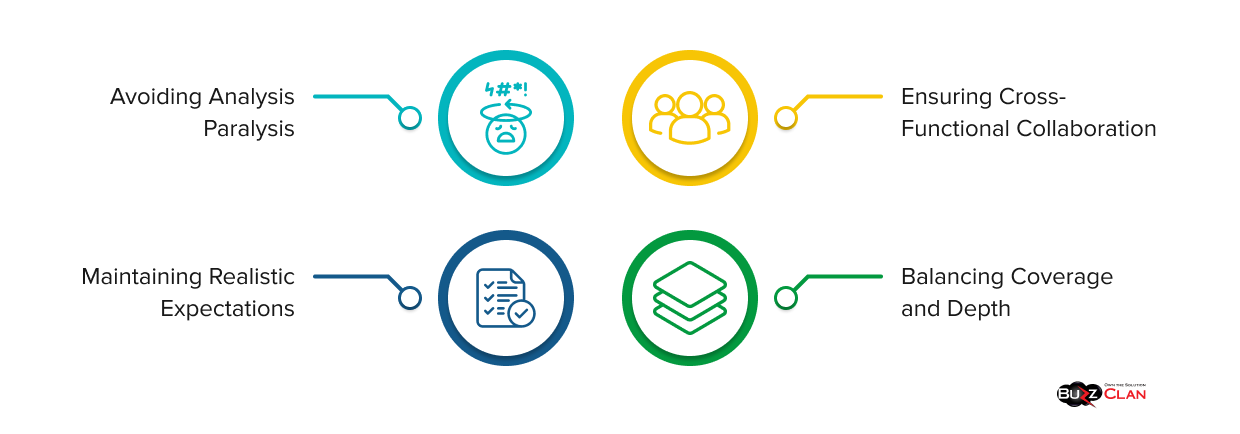
Avoiding Analysis Paralysis
The framework’s comprehensiveness can be overwhelming. Organizations may struggle to determine where to start, given hundreds of documented techniques. The solution is risk-based prioritization using threat intelligence to identify which techniques are most relevant rather than attempting to address everything simultaneously.
Focus initial efforts on techniques commonly used in early attack stages and those known to be used by threat actors targeting your industry. This approach delivers immediate risk reduction while building organizational momentum for broader adoption of the framework.
Maintaining Realistic Expectations
MITRE ATT&CK is a knowledge base and framework, not a product or turnkey solution. Organizations must invest effort to operationalize the framework within their environments. This requires skilled personnel who understand both the framework and their organization’s technical environment.
Set realistic timelines for implementation. Comprehensive MITRE ATT&CK adoption takes months or years, not weeks. Plan for incremental progress and celebrate milestones along the way.
Ensuring Cross-Functional Collaboration
A successful MITRE ATT&CK implementation requires collaboration across multiple teams – threat intelligence, security operations, incident response, and threat hunting. Organizations should establish regular working groups to bring these teams together, share insights, and coordinate activities.
Create shared vocabularies and processes that leverage the framework’s common language. When all teams reference MITRE technique IDs in their communications, collaboration becomes more efficient and less prone to miscommunication.
Balancing Coverage and Depth
Organizations face a tradeoff between broad coverage of many techniques and deep capabilities for fewer techniques. While comprehensive coverage seems ideal, it’s often more effective to have excellent detection for 50 techniques than mediocre detection for 150.
Prioritize depth in areas most critical to your risk profile. Ensure detection capabilities not only trigger alerts but also provide sufficient context for rapid analyst decision-making. Shallow detection that generates alerts without actionable information creates noise rather than value.
The Future of MITRE ATT&CK
The framework continues evolving to address emerging technologies and threat patterns. Recent updates reflect the changing security landscape and provide insight into future directions.
Expanding Cloud and Container Coverage
As organizations increasingly adopt cloud services and containerized applications, MITRE ATT&CK has expanded coverage of cloud-specific techniques. Recent versions include detailed documentation of techniques targeting AWS, Azure, and Google Cloud Platform, from exploiting misconfigured storage buckets to abusing cloud administration APIs.
Container security techniques continue to expand as Kubernetes becomes ubiquitous. The framework now documents techniques for escaping containers, abusing orchestration platforms, and leveraging container registries for malicious purposes.
Organizations modernizing their cloud infrastructure benefit from this expanded coverage, ensuring security programs keep pace with architectural changes.
Addressing Software Supply Chain Threats
Following high-profile supply chain compromises, MITRE ATT&CK has enhanced documentation of techniques used in these attacks. This includes methods for compromising software build pipelines, injecting malicious code into updates, and exploiting trusted relationships between software vendors and customers.
The framework helps organizations understand not just direct attacks against their systems but also how adversaries might compromise them through trusted third parties.
Artificial Intelligence and Machine Learning Integration
As AI becomes integral to both attack and defense, MITRE ATT&CK will likely expand to cover AI-specific techniques. This includes adversarial machine learning attacks that manipulate AI models, as well as methods for detecting and defending against AI-powered threats.
Security teams are already exploring how to apply MITRE ATT&CK concepts to AI systems, mapping adversary techniques for poisoning training data, evading ML-based detections, and exploiting AI model vulnerabilities.
Real-World Success Stories
Organizations across industries have achieved measurable security improvements through MITRE ATT&CK implementation.
Financial Services Sector
A major financial institution used MITRE ATT&CK to restructure its entire security operations program. By mapping existing tools to the framework, they identified that despite substantial security investment, they had minimal coverage of lateral movement and credential access techniques – critical for detecting and stopping advanced attackers.
The organization prioritized developing detection capabilities to address these gaps, implementing endpoint detection and response solutions, enhancing Windows authentication logging, and developing behavioral analytics to detect abnormal credential use. Within six months, they detected and stopped several credential-based attacks that previous controls would have missed.
Healthcare Organization
A healthcare system facing increased ransomware threats used MITRE ATT&CK to model ransomware attack chains. They identified specific ransomware techniques and assessed their ability to detect and prevent each.
The assessment revealed gaps in their ability to detect initial access through exposed Remote Desktop Protocol services and lacked automated response capabilities for ransomware encryption attempts. Addressing these specific gaps through network segmentation, RDP security hardening, and automated ransomware detection successfully prevented three ransomware attacks in the following year.
Technology Company
A software company used MITRE ATT&CK to guide its red team program. Rather than generic penetration testing, they developed red-team exercises that emulate the tactics of specific APT groups known to target technology companies. These realistic exercises revealed that while perimeter defenses were robust, internal detection capabilities were insufficient to stop adversaries who gained initial access.
This insight drove investment in internal network monitoring, deception technologies, and advanced endpoint protection, significantly improving their ability to detect and respond to sophisticated threats.
Building Your MITRE ATT&CK Program
Organizations ready to implement MITRE ATT&CK can follow this structured approach:

Phase 1: Foundation (Months 1-3)
- Conduct awareness training for security teams on MITRE ATT&CK concepts. Ensure all stakeholders understand the framework’s structure, terminology, and value proposition.
- Perform an initial coverage assessment and map existing security tools and processes to the framework. Document the techniques you can currently detect, prevent, or mitigate.
- Establish governance for MITRE ATT&CK implementation, including roles and responsibilities, decision-making processes, and success metrics.
Phase 2: Prioritization (Months 3-6)
- Analyze threat intelligence to identify techniques most relevant to your organization. Consider industry targeting patterns, geographic threat profiles, and your organization’s specific risk factors.
- Develop heat maps visualizing detection coverage, with techniques colored based on detection capability maturity. This creates a shared understanding of where investments will have the most impact.
- Create an implementation roadmap prioritizing technique coverage based on risk, feasibility, and resource requirements.
Phase 3: Implementation (Months 6-18)
- Develop detection capabilities for prioritized techniques, starting with early-stage attack techniques and high-risk gaps identified in the assessment.
- Conduct purple-team exercises to test the effectiveness of newly implemented capabilities in detecting threats. Validate that detections work as intended before considering them operational.
- Establish response procedures for each detected technique, ensuring analysts know how to investigate and remediate when a detection triggers.
Phase 4: Maturation (Months 18+)
- Expand coverage to additional techniques as initial priorities are addressed. Continuously reassess priorities based on evolving threat intelligence.
- Enhance detection fidelity by tuning rules and enriching alerts with additional context. Focus on reducing false positives while maintaining true positive rates.
- Measure and report on program effectiveness using MITRE-based metrics. Demonstrate value to stakeholders through concrete examples of threats detected and stopped.
- When implementing comprehensive security improvements, organizations often benefit from specialized expertise. Consulting with experienced security teams can accelerate MITRE ATT&CK adoption and avoid common pitfalls.

Making MITRE ATT&CK Work for Your Organization
The MITRE ATT&CK framework has fundamentally transformed how organizations approach cybersecurity. By shifting focus from reactive incident response to proactive threat-informed defense, organizations can build security programs that actually stop adversaries rather than merely detecting breaches after they occur.
Success with MITRE ATT&CK requires more than theoretical knowledge. Organizations must commit to operationalizing the framework, integrating it into daily security operations, and continuously evolving their capabilities as threats change. The investment is substantial, but the payoff – a dramatically more effective security program – makes it worthwhile.
Whether you’re starting your MITRE ATT&CK journey or looking to mature existing implementations, remember that perfect is the enemy of good. Start with focused priorities, deliver incremental value, and build momentum over time. The framework provides the structure and knowledge base, but your team’s creativity and persistence will determine ultimate success.
The cyber threat landscape will continue to evolve, but organizations armed with MITRE ATT&CK have a structured approach for adapting their defenses to keep pace. By understanding adversary tactics and techniques, security teams can finally get ahead of threats rather than constantly playing catch-up.
FAQs

Get In Touch
Follow Us